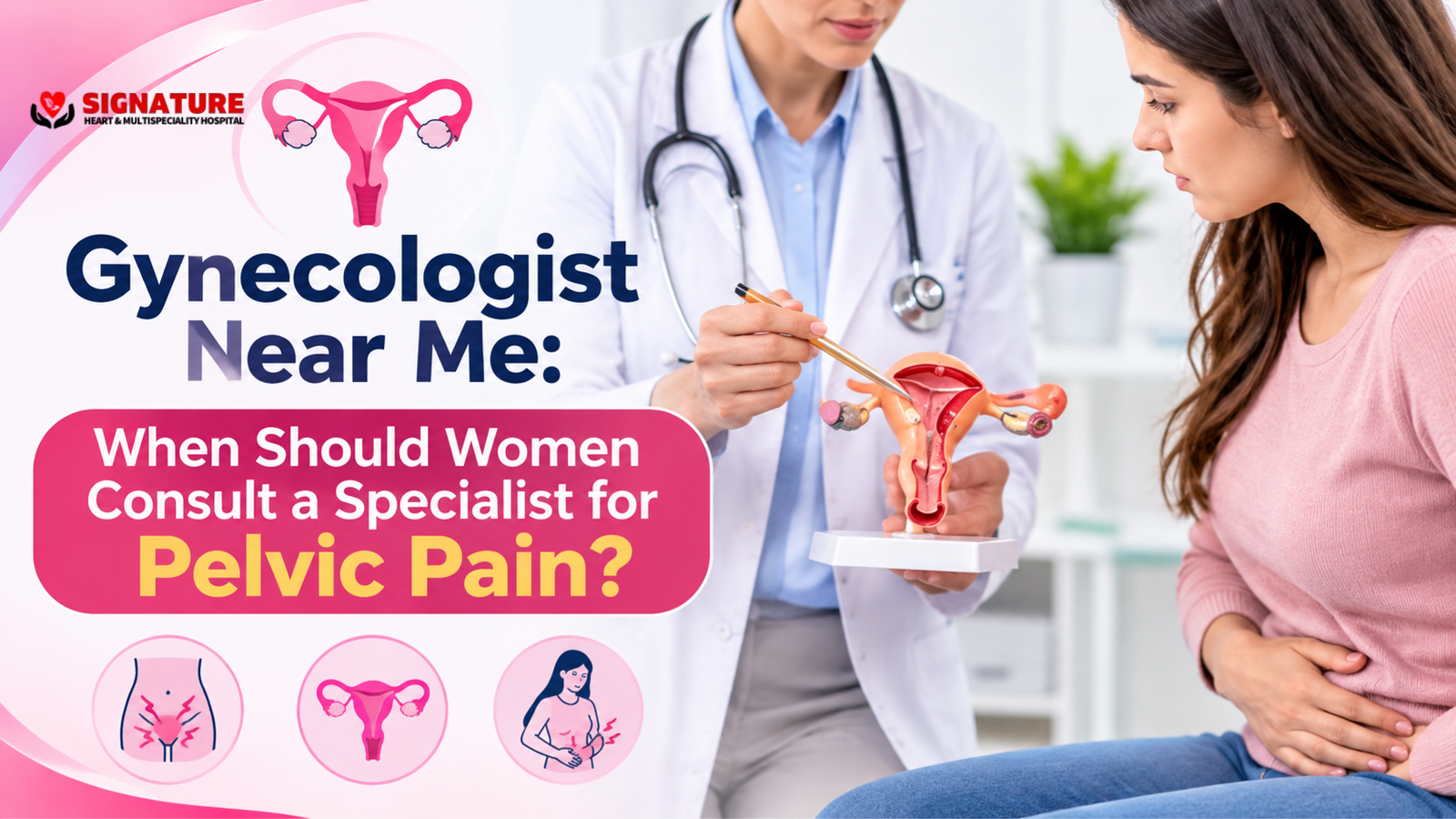
Pelvic pain is a common health concern among women, but it should not always be considered normal. Some women experience mild discomfort during menstruation, while others may have persistent lower abdominal pain, painful intercourse, or discomfort while urinating. These symptoms can sometimes indicate an underlying gynecological condition that requires medical attention.
If you are searching for a gynecologist near me, understanding the causes of pelvic pain and knowing when to consult a specialist can help you protect your reproductive health.
At Signature Heart & Multi-Speciality Hospital, Yamuna Vihar, women can access Gynecology & Obstetrics services for pelvic pain, menstrual problems, PCOS, fibroids, infertility evaluation, and other women’s health concerns.
What Is Pelvic Pain in Women?
Pelvic pain refers to discomfort in the lower abdominal area, below the belly button and around the reproductive organs. It can occur suddenly or develop gradually over time.
The pain may be mild, moderate, or severe. Some women experience continuous discomfort, while others notice pain during specific activities or at certain stages of their menstrual cycle.
Common symptoms include:
- Pain in the lower abdomen or pelvic region.
- Pain during or before menstruation.
- Discomfort during sexual intercourse.
- Lower back pain.
- Pain while urinating or passing stools.
- Unusual vaginal discharge.
- Heavy or irregular menstrual bleeding.
- A feeling of pressure or heaviness in the lower abdomen.
Persistent or recurring pelvic pain should be evaluated by a qualified gynecologist.
What Are the Common Causes of Pelvic Pain in Women?
Pelvic pain can develop due to several reproductive, urinary, digestive, or muscular conditions. Identifying the actual cause is important for selecting appropriate treatment.
1. Endometriosis
Endometriosis is a condition in which tissue similar to the lining of the uterus grows outside the uterus. It can cause severe menstrual cramps, chronic pelvic pain, painful intercourse, and sometimes difficulty becoming pregnant.
Women with persistent period pain should discuss their symptoms with a gynecologist.
2. Ovarian Cysts
Ovarian cysts are fluid-filled sacs that develop in or on the ovaries. Many cysts do not cause symptoms and may disappear without treatment.
However, larger cysts can cause pelvic pressure, bloating, and pain on one side of the lower abdomen. Sudden severe pain may indicate a complication requiring emergency evaluation.
3. Pelvic Inflammatory Disease (PID)
Pelvic inflammatory disease is an infection involving the female reproductive organs, including the uterus, fallopian tubes, and ovaries.
Possible symptoms include:
- Lower abdominal pain.
- Fever.
- Unusual vaginal discharge.
- Pain during intercourse.
- Bleeding between periods.
Early diagnosis and appropriate treatment are important to reduce the risk of reproductive complications.
4. Uterine Fibroids
Fibroids are non-cancerous growths that develop in the uterus. Their size and location can influence the symptoms.
Common symptoms include heavy menstrual bleeding, pelvic pressure, frequent urination, lower back pain, and abdominal discomfort.
Read more about Women’s Health and Maternity Care in Yamuna Vihar to understand the range of gynecological concerns that may require specialist evaluation.
5. Urinary Tract Infections (UTIs)
A urinary tract infection can also cause discomfort in the lower abdomen or pelvic area.
Women may experience burning during urination, frequent urination, cloudy urine, or lower abdominal discomfort. Medical evaluation helps determine whether the pain is related to a urinary or gynecological condition.
6. Menstrual Cramps
Mild menstrual cramps are common and usually occur before or during periods. However, severe cramps that interfere with daily activities may require investigation for conditions such as endometriosis, adenomyosis, or fibroids.
When Should You Consult a Gynecologist for Pelvic Pain?
You should consult a gynecologist if pelvic pain is persistent, recurring, worsening, or affecting your everyday activities.
A specialist consultation is particularly important if you experience:
- Severe menstrual cramps that do not improve.
- Repeated lower abdominal or pelvic pain.
- Pain during sexual intercourse.
- Unusual vaginal discharge or bleeding.
- Heavy or irregular periods.
- Pain during urination or bowel movements.
- Difficulty becoming pregnant along with pelvic discomfort.
- Pelvic pain that continues even after menstruation.
Important: Sudden severe pelvic pain, especially with fainting, dizziness, heavy vaginal bleeding, fever, or vomiting, requires immediate medical attention. If pregnancy is possible, pelvic pain with bleeding or dizziness also needs urgent assessment because an ectopic pregnancy must be ruled out.
Do not delay emergency care while waiting for a routine gynecologist appointment.
How Does a Gynecologist Diagnose Pelvic Pain?
A gynecologist begins by understanding the patient’s symptoms, medical history, and menstrual cycle. The doctor may recommend different tests depending on the suspected cause.
Common diagnostic methods include:
1. Medical History: The doctor asks about pain duration, location, severity, menstrual history, previous pregnancies, and other symptoms.
2. Physical Examination: An examination may be recommended to understand the source of discomfort. The doctor will explain the procedure and obtain consent.
3. Pelvic Ultrasound: Ultrasound helps examine the uterus, ovaries, and surrounding pelvic structures. It may help identify ovarian cysts, fibroids, and other abnormalities.
4. Blood and Urine Tests: These tests may help identify infections, pregnancy-related concerns, or other medical conditions.
5. Additional Investigations: Depending on the findings, further imaging or specialist investigations may be required.
Not every patient needs every test. The investigation plan depends on individual symptoms and clinical findings.
What Are the Treatment Options for Pelvic Pain?
Pelvic pain treatment depends on its underlying cause, severity, medical history, and reproductive goals.
Common treatment approaches include:
Medication
Doctors may prescribe pain-relieving medicines, antibiotics for certain bacterial infections, or hormonal medicines for specific gynecological conditions.
Treatment for Endometriosis
Management may include pain relief, hormonal treatment, and, in selected cases, surgery. The approach depends on symptoms and fertility plans.
Ovarian Cyst Management
Some ovarian cysts require only monitoring through follow-up examinations and ultrasound. Others may need medication or surgical treatment depending on their type, size, and complications.
Fibroid Treatment
Treatment may include observation, medication, or surgical procedures depending on symptoms and the characteristics of the fibroids.
Lifestyle and Supportive Care
Regular physical activity, adequate sleep, balanced nutrition, and appropriate pain-management strategies may help improve overall well-being. However, lifestyle changes should not replace medical evaluation when pain persists.
Can Pelvic Pain Affect Fertility?
Yes, certain conditions associated with pelvic pain can affect fertility.
For example, endometriosis and pelvic inflammatory disease may interfere with normal reproductive functions. Some ovarian and uterine conditions may also affect conception.
However, pelvic pain does not automatically mean infertility. Many women with these conditions can conceive naturally or with appropriate medical support.
Women experiencing persistent pelvic pain and difficulty conceiving should consider a gynecological and fertility evaluation.
If you are also experiencing irregular periods or other hormonal symptoms, read our guide on PCOS Treatment in Yamuna Vihar for more information about PCOS and reproductive health.
Gynecology & Obstetrics Care at Signature Heart & Multi-Speciality Hospital
For women searching for a gynecologist near me in Yamuna Vihar, Delhi, Signature Heart & Multi-Speciality Hospital provides Gynecology & Obstetrics services for different stages of women’s health.
The hospital lists specialists including Dr. Surbhi Gupta (MBBS, MS), Dr. Ashima Aron (MBBS, MS), and Dr. Praveen Kumar (MBBS, DGO).
The department provides care for:
- Pelvic pain and menstrual irregularities.
- PCOS and PCOD.
- Endometriosis.
- Uterine fibroids.
- Infertility evaluation.
- Pregnancy and antenatal care.
- High-risk pregnancy.
- Postnatal care.
- Menopause-related concerns.
The hospital also provides diagnostic facilities, ICU support, and 24×7 emergency services.
Women planning a pregnancy or experiencing pregnancy-related concerns can also explore our detailed guide on Gynecology and Pregnancy Care in Yamuna Vihar.
Frequently Asked Questions About Pelvic Pain
1. When should I see a gynecologist for pelvic pain?
You should consult a gynecologist if pelvic pain is persistent, recurring, severe, or affecting daily activities. Pain associated with heavy bleeding, unusual discharge, or painful intercourse also requires medical evaluation.
2. Can pelvic pain be a sign of endometriosis?
Yes. Endometriosis can cause chronic pelvic pain, painful periods, pain during intercourse, and sometimes fertility problems. A gynecologist can recommend suitable investigations.
3. Can ovarian cysts cause lower abdominal pain?
Yes. Some ovarian cysts cause pain on one side of the lower abdomen, bloating, or pelvic pressure. Sudden severe pain requires urgent medical assessment.
4. Which tests are recommended for pelvic pain in women?
Depending on the symptoms, a gynecologist may recommend pelvic ultrasound, blood tests, urine tests, pregnancy testing, or additional investigations to identify the cause.
5. Where can I consult a gynecologist near Yamuna Vihar?
You can consult the Gynecology & Obstetrics department at Signature Heart & Multi-Speciality Hospital, C-2/41 A, Main Service Lane, Block C, Yamuna Vihar, Delhi – 110053. Call 76783 87693 to enquire about doctor availability and appointments.
Book a Gynecologist Consultation in Yamuna Vihar
Pelvic pain should not be ignored, especially when it becomes frequent, severe, or starts affecting your daily routine. Early medical evaluation can help identify the underlying condition and guide appropriate treatment.
If you are experiencing lower abdominal pain, painful periods, ovarian cyst symptoms, or persistent pelvic discomfort, consult the Gynecology & Obstetrics team at Signature Heart & Multi-Speciality Hospital.
Hospital: Signature Heart & Multi-Speciality Hospital
Address: C-2/41 A, Main Service Lane, Block C, Yamuna Vihar, Delhi – 110053
Appointment & Emergency Helpline: 76783 87693
Email: info@shmsd.in
Availability: Open 24 Hours
Call today to enquire about a gynecologist consultation and take the right step towards better reproductive health.