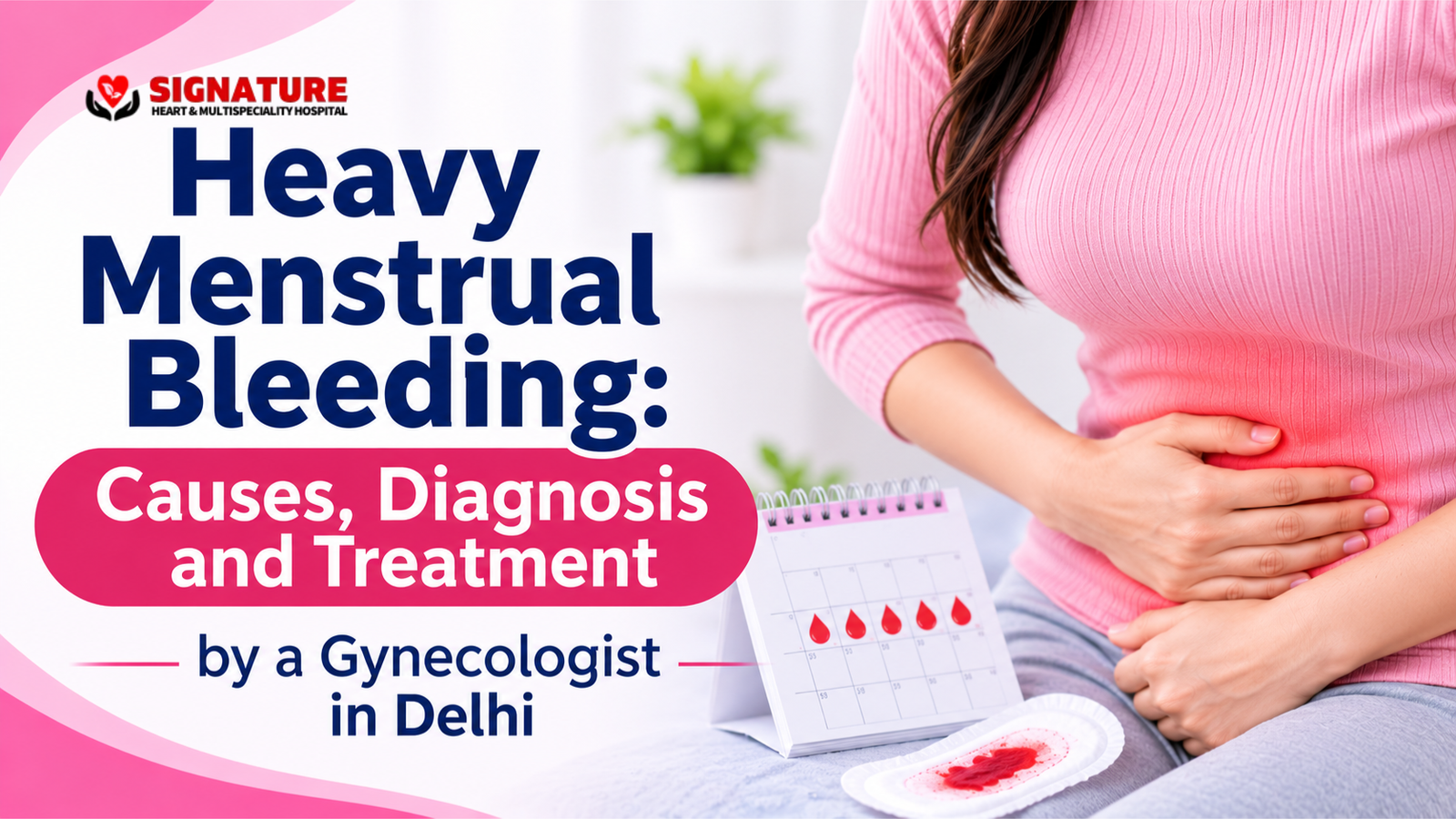
Heavy menstrual bleeding, also called menorrhagia, is a common menstrual health concern. However, periods that are unusually heavy, last longer than seven days, or interfere with daily activities should not be ignored. Heavy bleeding may cause weakness, tiredness and iron-deficiency anaemia. It can also be a sign of an underlying gynaecological condition.
If you are experiencing heavy periods, consulting a gynecologist in Delhi can help identify the cause and guide you towards suitable treatment. At Signature Heart & Multi-Speciality Hospital, Yamuna Vihar, women can seek medical guidance for menstrual problems and other gynaecological concerns.
What Is Considered Heavy Menstrual Bleeding?
Heavy menstrual bleeding means losing more blood than usual during your period or having menstrual bleeding that affects your everyday life.
You may be experiencing heavy menstrual bleeding if:
- Your period lasts longer than seven days.
- You need to change your sanitary pad every one or two hours.
- You frequently pass large blood clots.
- You need to use more than one menstrual product at a time.
- You experience bleeding through clothes or bedsheets.
- You feel unusually tired, weak or short of breath during your period.
Every woman’s menstrual cycle is different. However, if your bleeding pattern changes or affects your routine, it is important to discuss it with a doctor. Read more about heavy menstrual bleeding.
What Are the Common Causes of Heavy Menstrual Bleeding?
Heavy periods can happen due to hormonal changes, problems involving the uterus or certain medical conditions. Identifying the underlying cause is important for choosing the right treatment.
1. Hormonal Imbalance
Hormones help regulate the menstrual cycle. When the balance between oestrogen and progesterone changes, the uterine lining may become thicker than usual. This can result in heavier or irregular bleeding.
Hormonal changes may occur during adolescence, after pregnancy and around menopause. Conditions such as PCOS can also affect ovulation and menstrual patterns.
2. Uterine Fibroids
Fibroids are non-cancerous growths that develop in or around the uterus. Depending on their size and location, they may cause:
- Heavy or prolonged periods
- Pelvic pressure or pain
- Frequent urination
- Difficulty becoming pregnant in some cases
A gynecologist may recommend an ultrasound to check for fibroids.
3. Adenomyosis and Endometriosis
Adenomyosis occurs when tissue similar to the uterine lining grows into the muscular wall of the uterus. It may cause heavy periods and painful menstrual cramps.
Endometriosis occurs when tissue similar to the uterine lining grows outside the uterus. Some women experience painful periods, pelvic pain and fertility-related concerns.
4. Polycystic Ovary Syndrome (PCOS)
PCOS can affect ovulation and cause irregular menstrual cycles. Some women may experience long gaps between periods followed by prolonged or heavy bleeding.
Women experiencing irregular periods along with acne, unwanted hair growth or weight changes should discuss these symptoms with a gynecologist. You can also read about PCOS treatment in Yamuna Vihar.
5. Thyroid Problems and Bleeding Disorders
An underactive thyroid may affect menstrual regularity and flow. Certain inherited bleeding disorders can also make periods unusually heavy.
Some medicines, including blood-thinning medicines, and certain contraceptive devices may contribute to heavier menstrual bleeding. Do not stop prescribed medicines without medical advice.
When Should You Consult a Gynecologist?
You should consult a gynecologist if heavy periods are repeated, becoming worse or affecting your quality of life.
Watch for these symptoms:
- Periods lasting more than seven days
- Severe menstrual cramps or pelvic pain
- Large blood clots during menstruation
- Bleeding between periods or after sexual intercourse
- Unusual tiredness, dizziness or weakness
- Shortness of breath during normal activities
- Sudden changes in your regular menstrual cycle
Seek urgent medical attention if you are soaking through a pad every hour for several consecutive hours, especially if you feel faint, dizzy, breathless or very weak. Heavy bleeding with possible pregnancy also needs prompt medical assessment.
Early evaluation can help identify the cause and reduce the risk of complications.
How Is Heavy Menstrual Bleeding Diagnosed?
A gynecologist usually begins by understanding your menstrual history, symptoms and medical background. The tests recommended depend on your age, symptoms and examination findings.
Common diagnostic steps may include:
1. Medical History and Physical Examination
The doctor may ask about your menstrual cycle, bleeding duration, pregnancy history, medicines and family history. A physical examination may be recommended when clinically appropriate.
2. Blood Tests
Blood tests may be advised to check haemoglobin levels and identify anaemia. Depending on your symptoms, the doctor may also recommend thyroid function tests or tests for a possible bleeding disorder.
3. Pelvic Ultrasound
An ultrasound helps examine the uterus, ovaries and surrounding pelvic structures. It can help identify fibroids, ovarian abnormalities and other possible causes of heavy bleeding.
4. Additional Investigations
In selected cases, a doctor may recommend hysteroscopy, sonohysterography or endometrial sampling. These investigations help assess the inside of the uterus or examine its lining when needed.
Not every woman requires all these tests. The doctor selects investigations according to individual medical needs.
What Are the Treatment Options for Heavy Menstrual Bleeding?
Treatment depends on the cause, severity of bleeding, age, general health and whether you wish to have children in the future.
1. Medicines to Control Bleeding
A doctor may prescribe medicines such as tranexamic acid to reduce menstrual blood loss. Certain anti-inflammatory medicines may also help manage period pain and bleeding in appropriate patients.
These medicines are not suitable for everyone, so they should only be taken after medical advice.
2. Hormonal Treatment
Hormonal medicines or suitable contraceptive options may help regulate periods and reduce excessive bleeding. The choice depends on your medical history, risk factors and reproductive plans.
3. Treatment for Fibroids and Other Conditions
If fibroids, polyps or adenomyosis are responsible for heavy bleeding, treatment may focus on the underlying condition. Options can include medicines, minimally invasive procedures or surgery, depending on the diagnosis.
4. Iron Supplements
If heavy periods have caused iron deficiency or anaemia, the doctor may recommend iron supplements and dietary guidance. Follow-up blood tests may be needed to monitor recovery.
5. Surgical Treatment
Surgery is considered in selected cases when other treatments are unsuitable or have not provided enough relief. Procedures may include removal of fibroids or, in certain circumstances, endometrial ablation or hysterectomy.
The decision should be made after discussing the benefits, risks and future pregnancy plans with the specialist.
Managing Menstrual Health with Regular Check-ups
A few simple habits can help you monitor your menstrual health:
- Maintain a record of your period dates and bleeding duration.
- Note how frequently you change sanitary pads.
- Record unusual pain, clots or bleeding between periods.
- Eat a balanced diet containing iron-rich foods.
- Avoid taking hormonal medicines without a prescription.
- Attend recommended follow-up appointments.
Keeping a menstrual record can help your gynecologist understand changes in your cycle. For additional guidance, explore women’s health and maternity care in Yamuna Vihar.
Consult a Gynecologist at Signature Heart & Multi-Speciality Hospital, Delhi
Heavy menstrual bleeding should not be considered something you simply have to tolerate. Timely medical evaluation can help identify conditions such as fibroids, hormonal imbalance, PCOS and thyroid problems.
At Signature Heart & Multi-Speciality Hospital, Yamuna Vihar, women can consult the Gynecology & Obstetrics department for menstrual irregularities, PCOS, fibroids, pelvic pain and other women’s health concerns.
Learn more about the hospital’s Gynecology & Obstetrics services in Yamuna Vihar or explore pregnancy care in Yamuna Vihar.
Book a consultation today to discuss your symptoms and understand the treatment options suitable for your health.
Hospital: Signature Heart & Multi-Speciality Hospital
Address: C-2/41 A, Main Service Lane, Block C, Yamuna Vihar, Delhi 110053
Phone: 76783 87693
Email: info@shmsd.in
Hospital Hours: Open 24 hours
Frequently Asked Questions (FAQs)
1. What is the main cause of heavy menstrual bleeding?
Common causes include hormonal imbalance, uterine fibroids, adenomyosis, PCOS, thyroid problems and certain bleeding disorders. A medical evaluation helps identify the cause.
2. How many days of menstrual bleeding are considered abnormal?
Bleeding that lasts longer than seven days may be a sign of heavy menstrual bleeding, particularly when the flow is excessive or affects daily activities.
3. Can PCOS cause heavy menstrual bleeding?
Yes. PCOS can affect ovulation and cause irregular periods. Some women may experience prolonged or heavy bleeding after missing periods for several weeks or months.
4. Which tests are used to diagnose heavy periods?
Depending on the symptoms, a gynecologist may recommend blood tests, haemoglobin testing, thyroid tests, pelvic ultrasound and selected investigations such as hysteroscopy.
5. Can heavy menstrual bleeding be treated without surgery?
Yes. Many women can be treated with medicines, hormonal options or iron supplements, depending on the cause. Surgery is considered only when clinically appropriate.